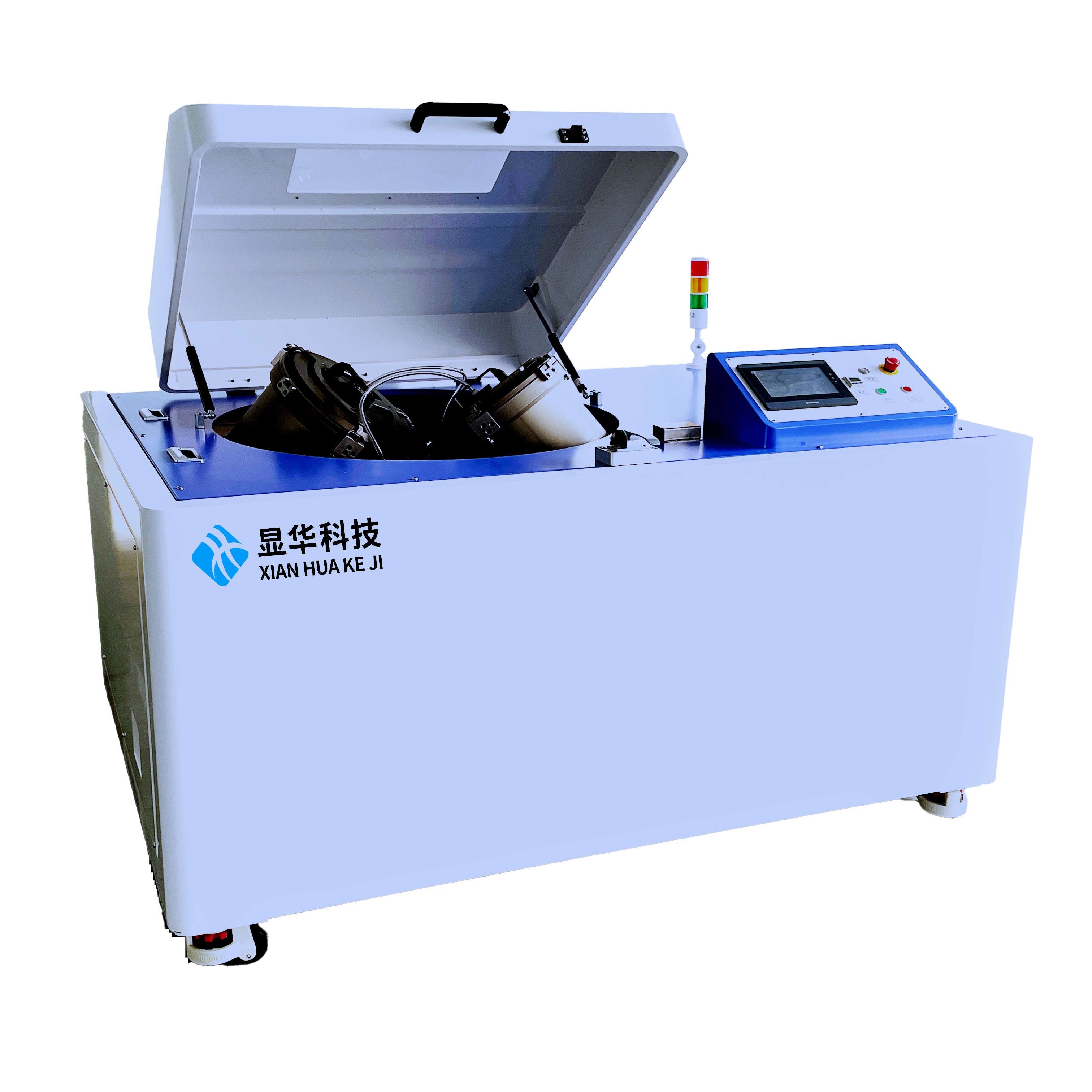
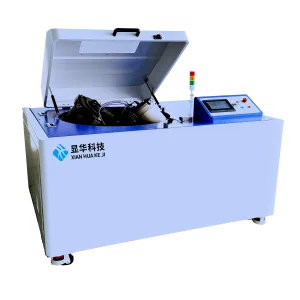
High-density Materials Stir 20L Vacuum Planetary Mixer Cosmetic Vacuum Degassing Machine for Paste/Optical Materials

Product Description

Products Description
Product View 1
Product View 2
Product View 3
Product View 4
Product View 5
Product View 6
Product View 7
Product View 8
Details Images
Detail 1
Detail 2
Detail 3
Detail 4
Detail 5
Detail Multi 1
Detail Multi 2
Detail Multi 3
Detail 6
Specifications
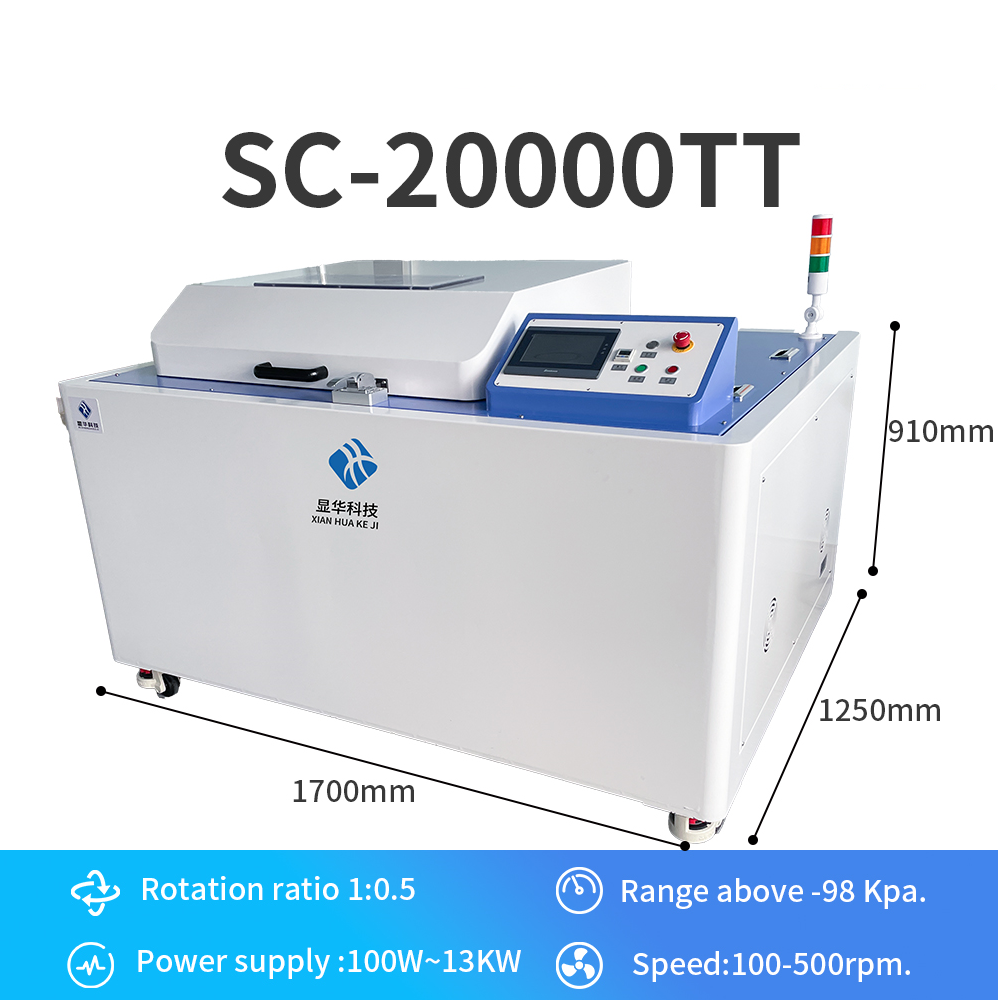
Model: SC-20000TT
Product name SC-20000TT
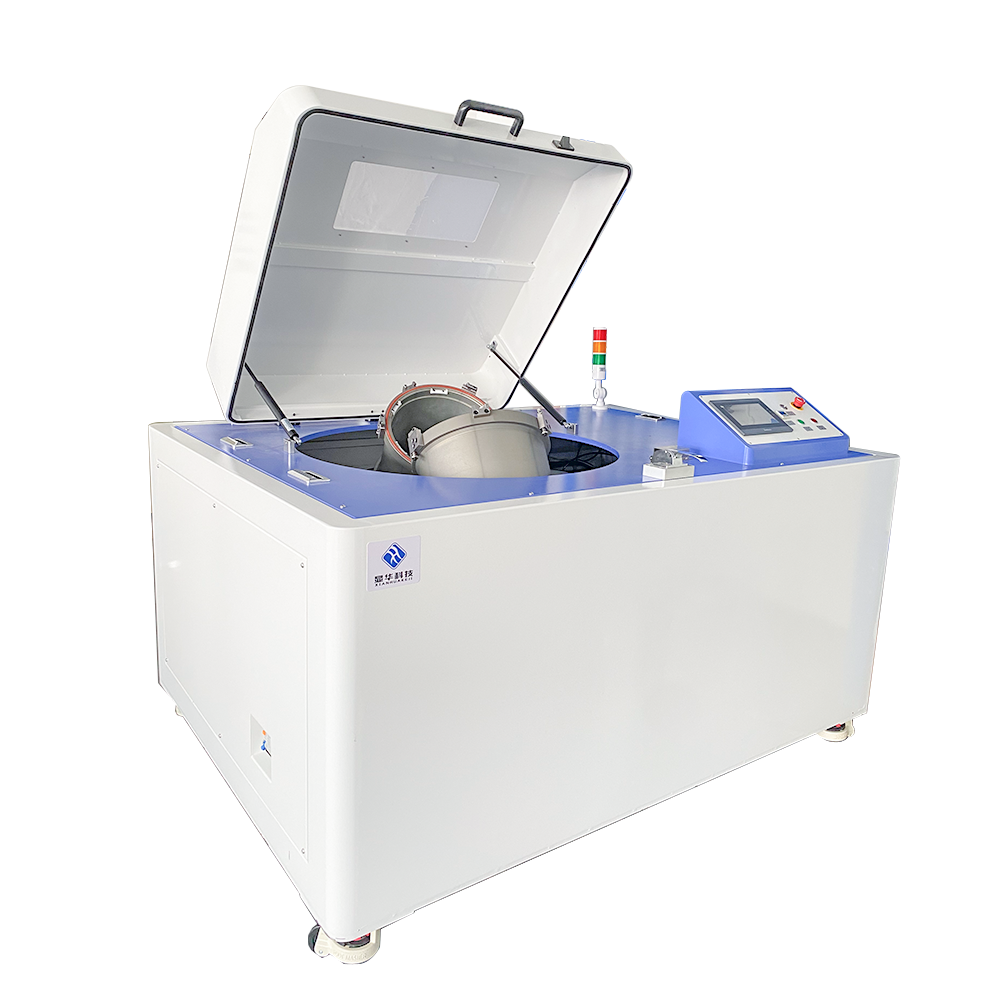
mixer type Planetary Vacuum Mixer
barrel volume (L) 20000ml
Processable materials chemicals, conductive paste...etc.
weight (kg) 1000KG
Voltage AC 380V
power (kw) 13kw
warranty 1 Year
range of spindle speed(r.p.m) 100 - 500 r.p.m
Optimal mixing capacity range 5L-20L
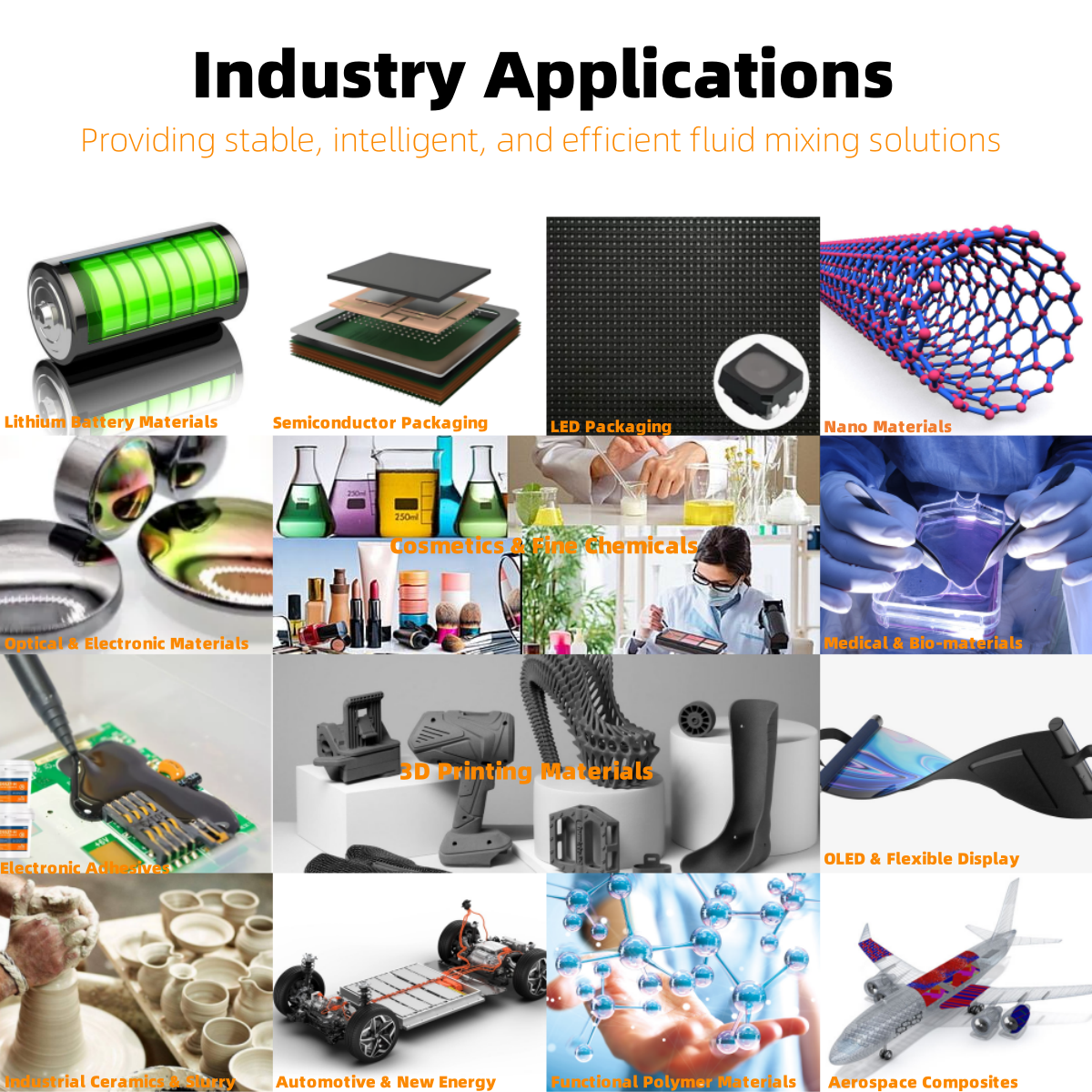
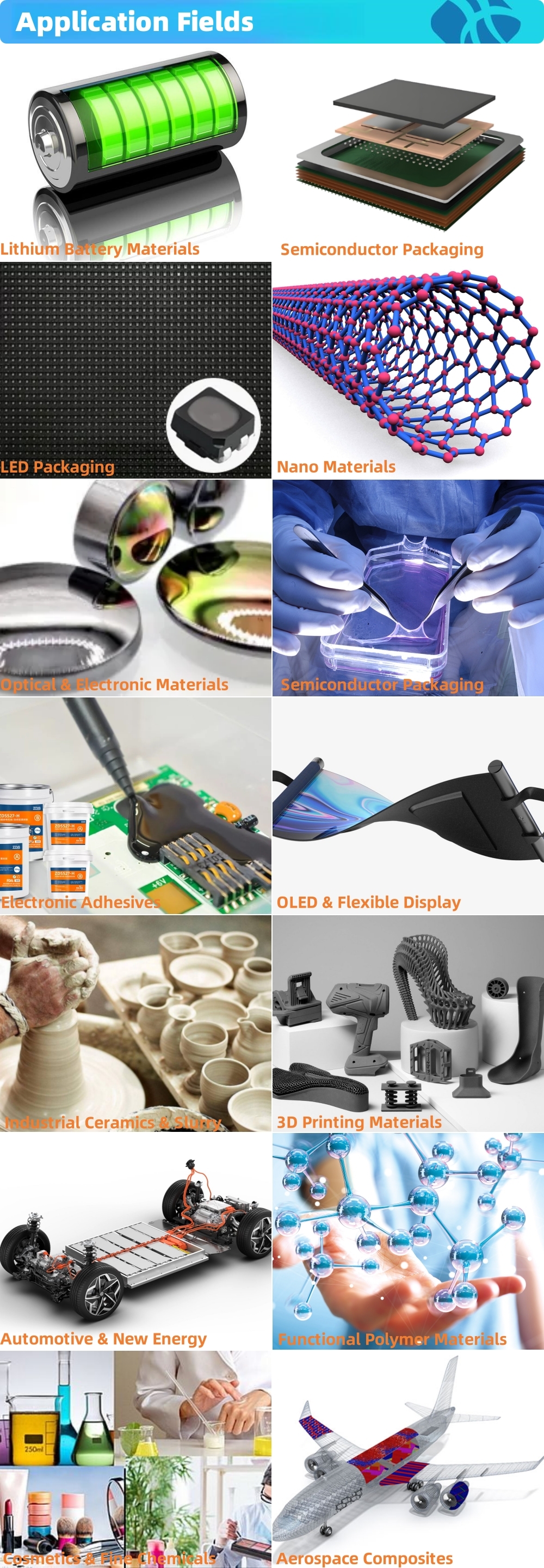
application Lithium Battery Materials Semiconductor Packaging Materials, LED Packaging Materials, Nano Materials, Optical & Electronic Materials, Medical & Bio-materials, Electronic Adhesives materials, OLED & Flexible Display materials, Industrial Ceramics & Slurry materials, 3D Printing Materials, Automotive & New Energy Materials, Functional Polymer Materials, Cosmetics & Fine Chemicals, Aerospace Composites Materials, Viscous Fluid ect.
Size 1700mm(L)*1257mm(W)*910mm(H)
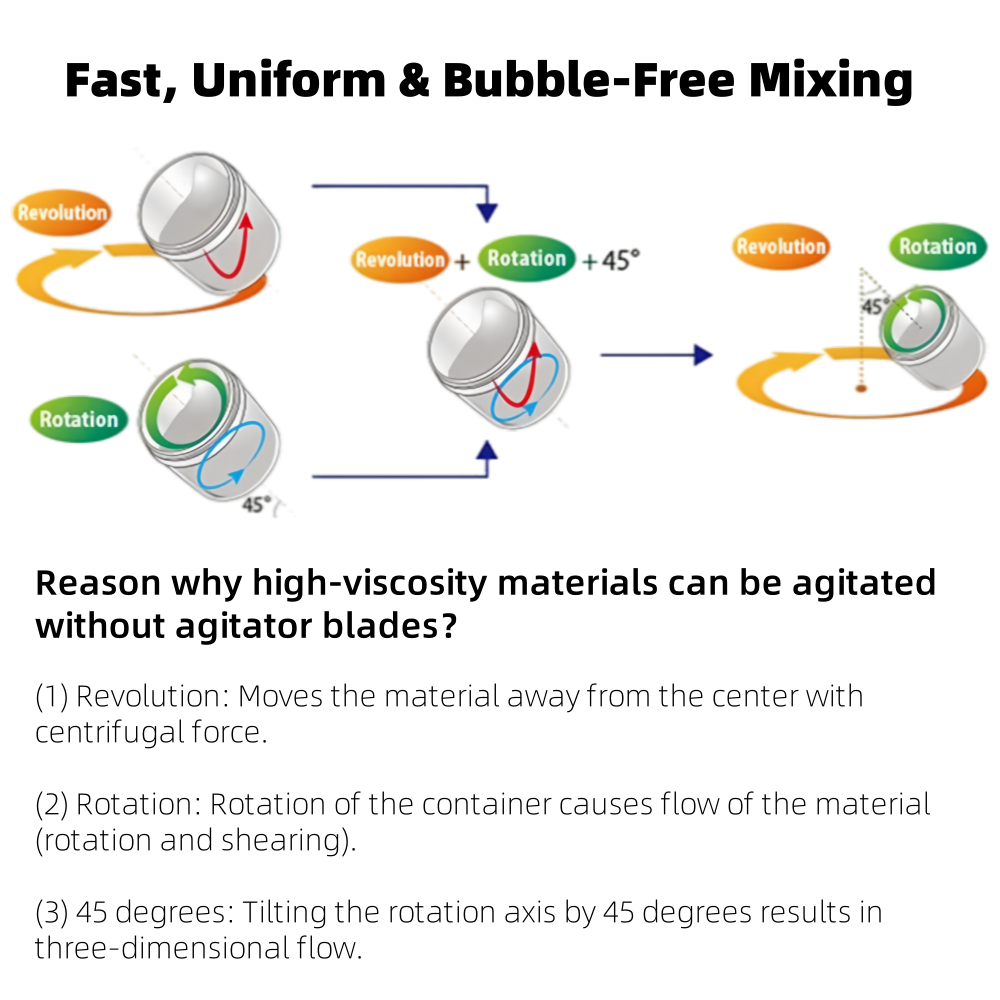
key selling points Fast, Uniform & Bubble-Free Mixing
machinery test report Provided
video outgoing-inspection Provided
core components Motor, Pump, PLC, Bearing
Memory condition 5 programs
Continuous running time 30min
Mixing type Planetary Vacuum Mixing and Defoaming Machine
Capacity 10000ml*2
Advantage High efficiency, No dead corners, With centrifugal + vacuum, Adjustable high-speed, Low heat generation, Easy container change, Compact
MOQ 1pcs
Mixing speed 500rpm
Stirrer type non-contact
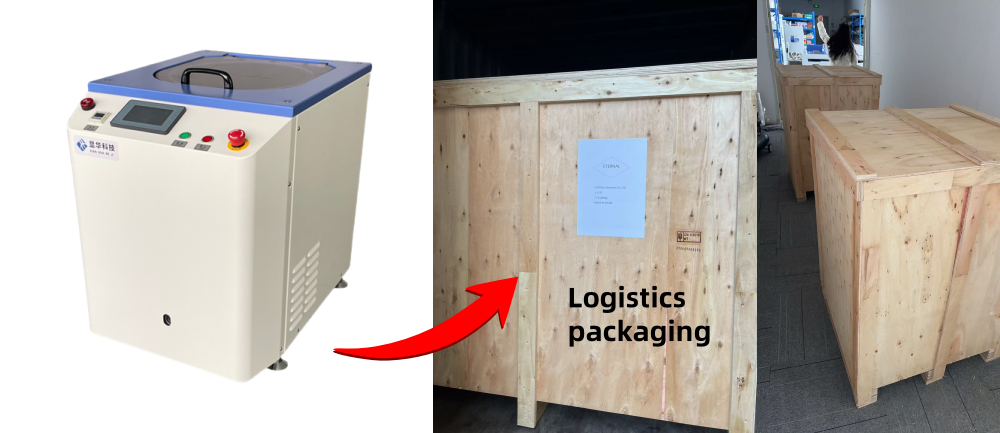
Packaging Details Standard as the export package requirements
Selling Units Single item
Single gross weight 0.2 kg
Supply Ability 30 Set/Sets per Month
Feature Image 1
Feature Image 2
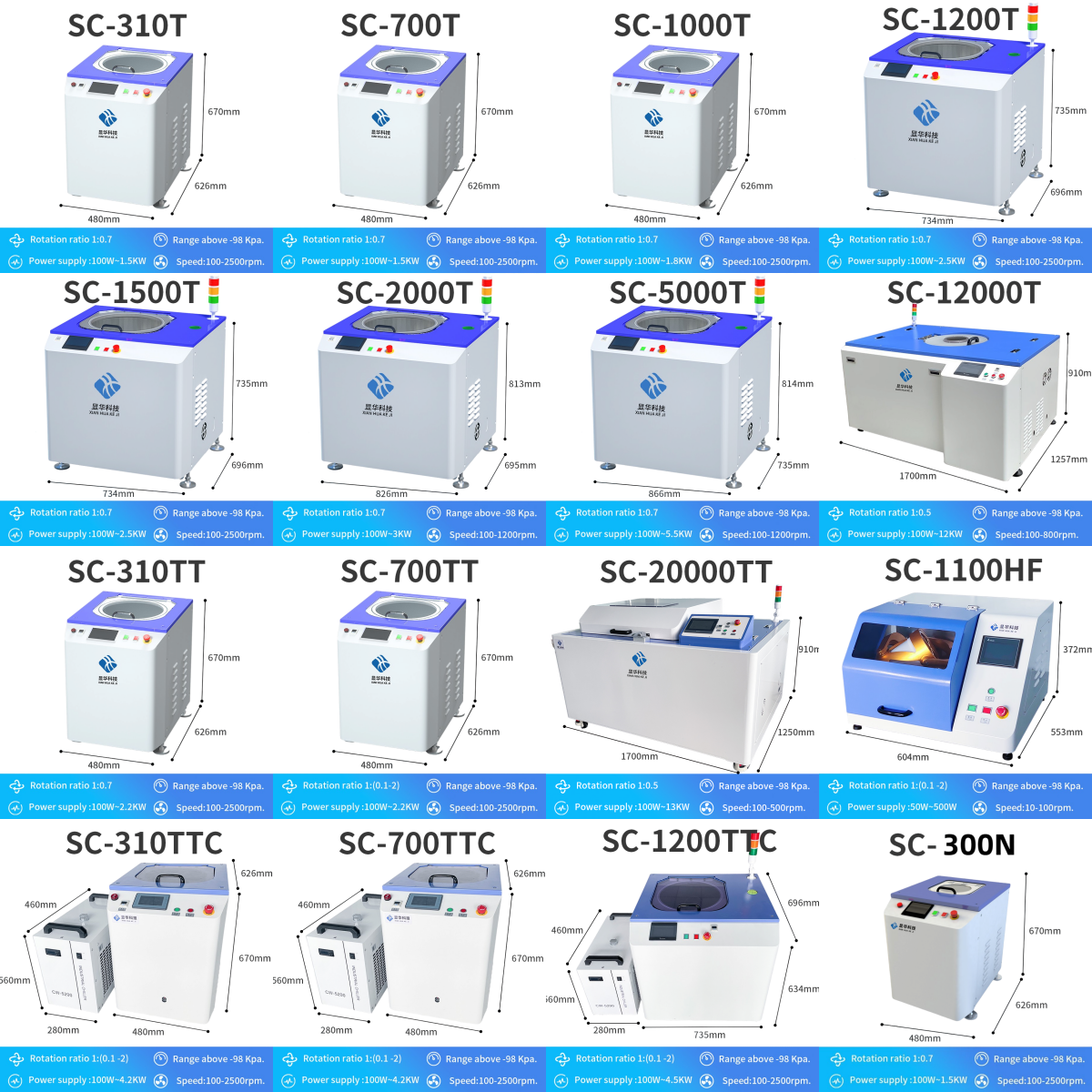
Model Explanation Guide

Capacity indicator: The model number of the product represents the capacity (e.g., 300 represents 300ML, 1200 represents 1200ML, and so on).

  • Single T: Represents a single motor that is constant and cannot be adjusted.
  • Double TT: Represents dual motors that are independently adjustable.
  • TTC: Represents dual motors that can be refrigerated and are independently adjustable.
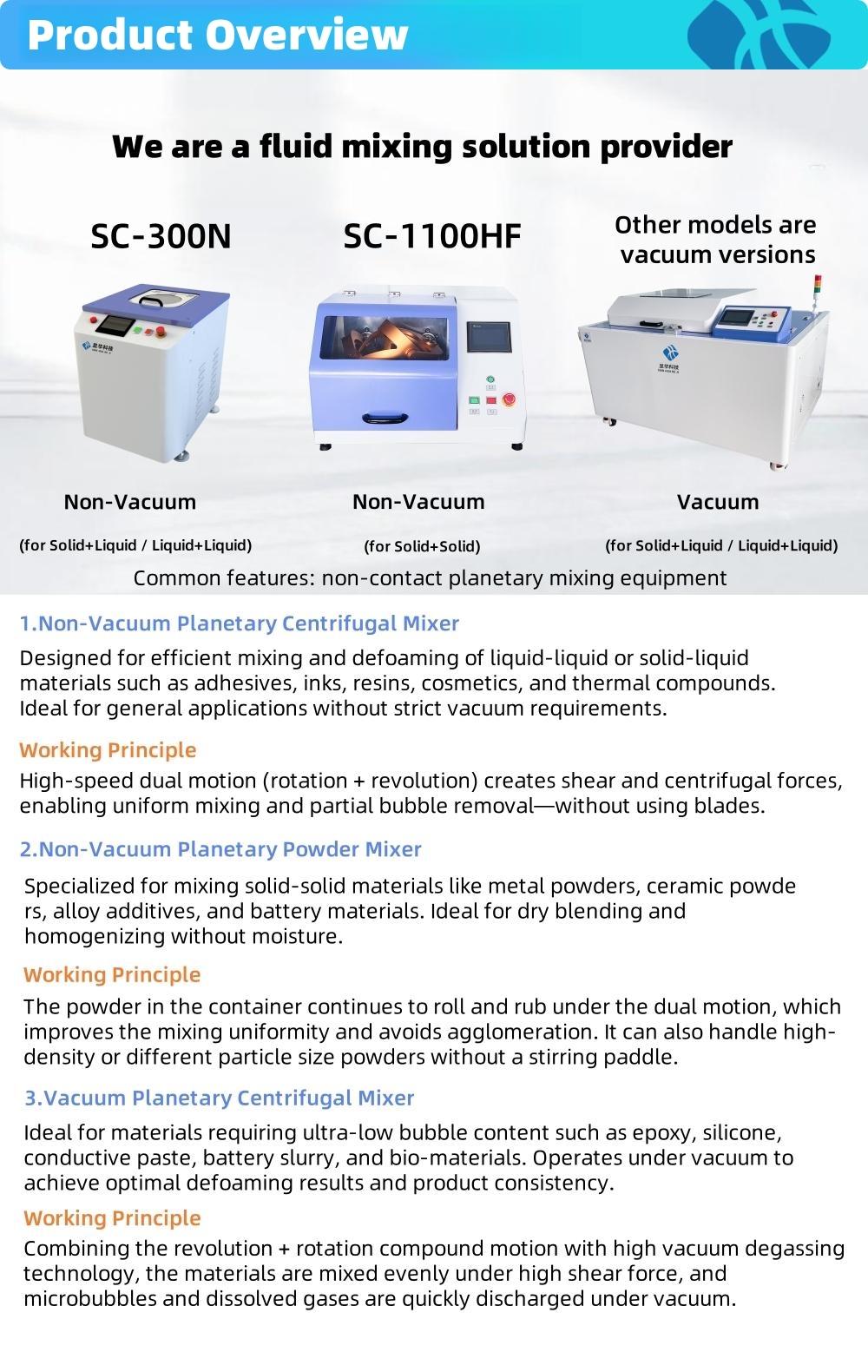
  • SC-1100HF: Represents a non-vacuum powder mixer, only this model.
  • SC-300N: Represents non-vacuum, non-refrigeration, single machine, only this model.
Feature Image 3
Feature Image 4
Feature Image 5
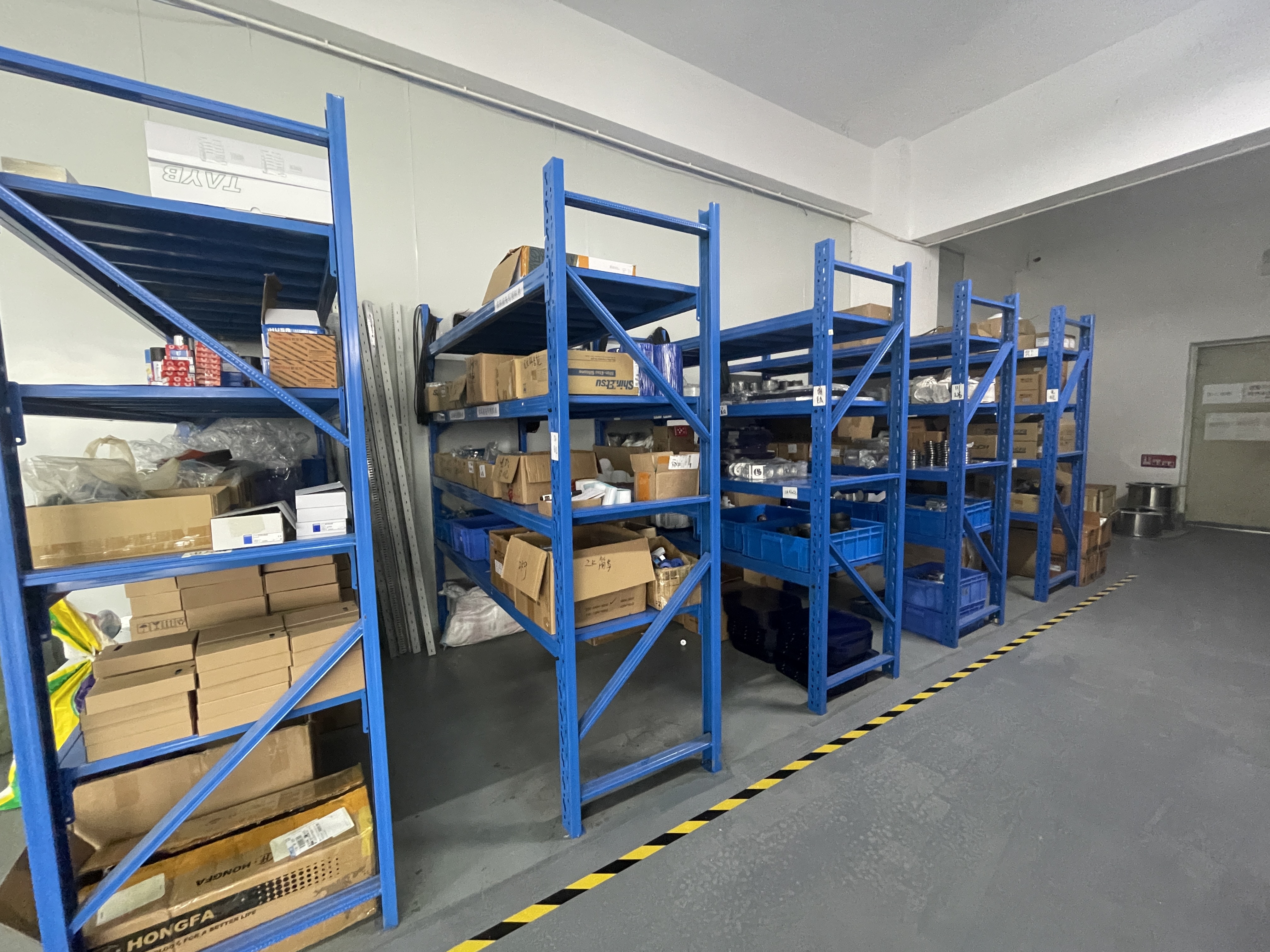
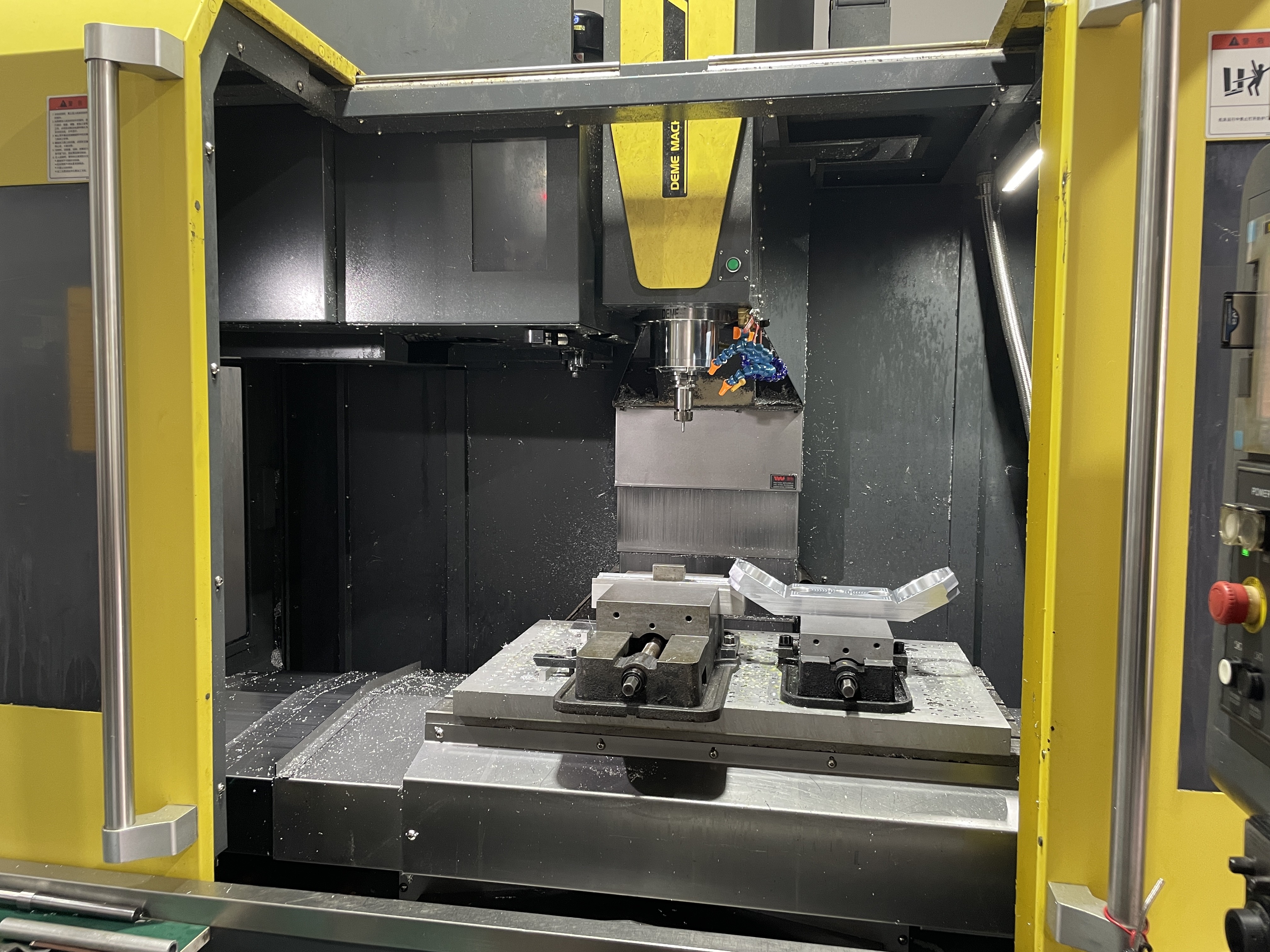
Factory Image 1
Factory Image 2
Factory Image 3
Factory Image 4
Factory Image 5
Factory Image 6
Factory Image 7
Exhibition
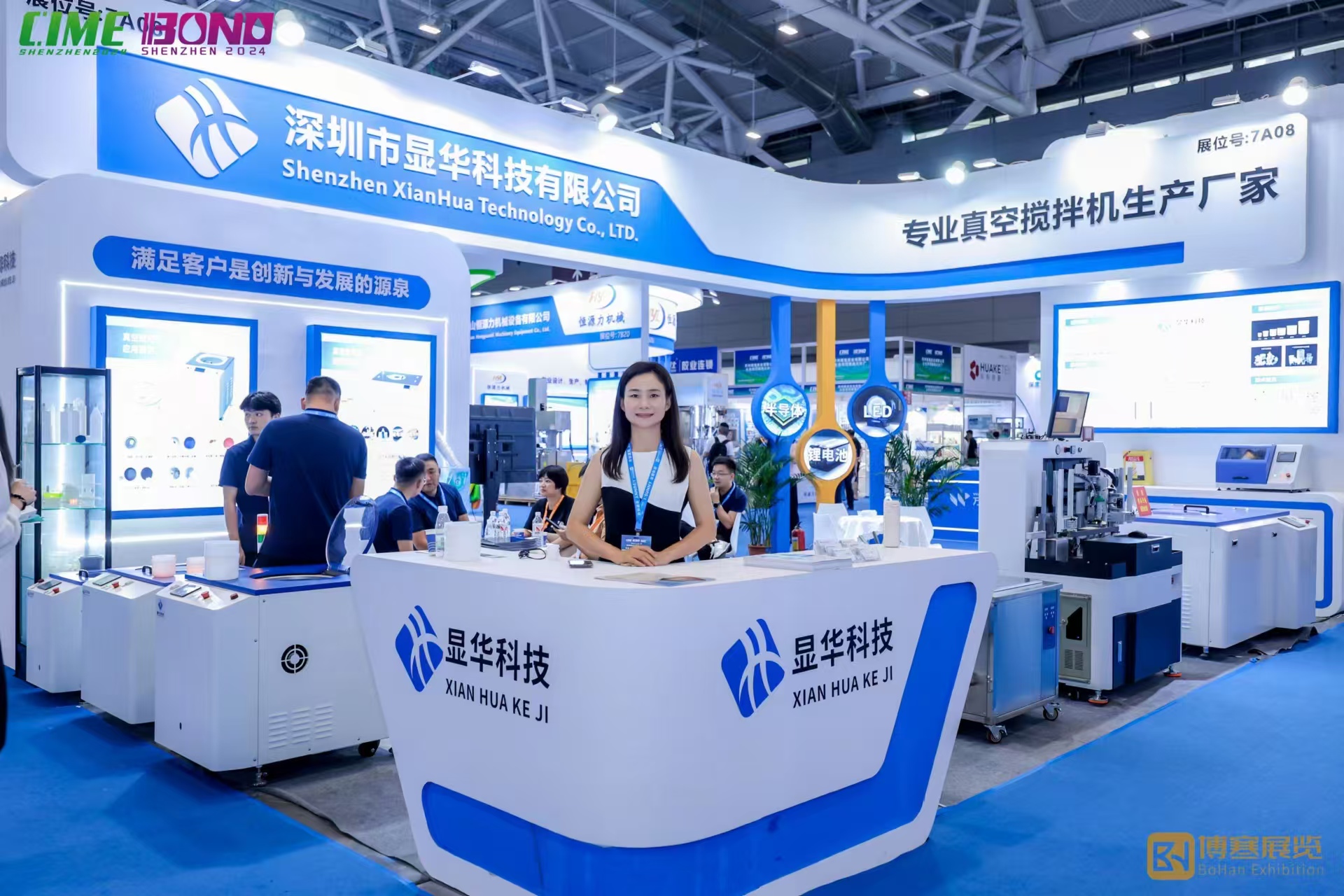
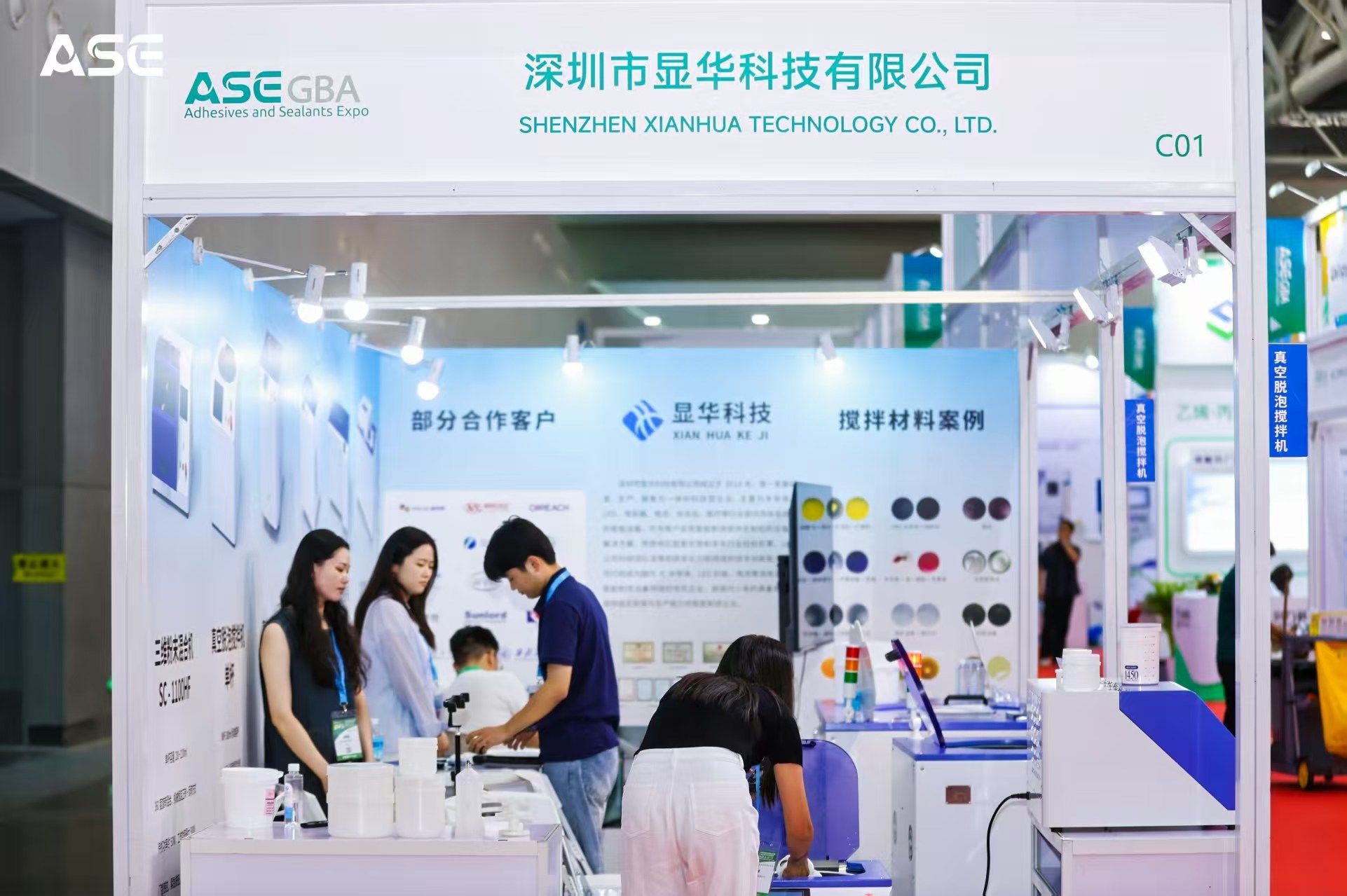
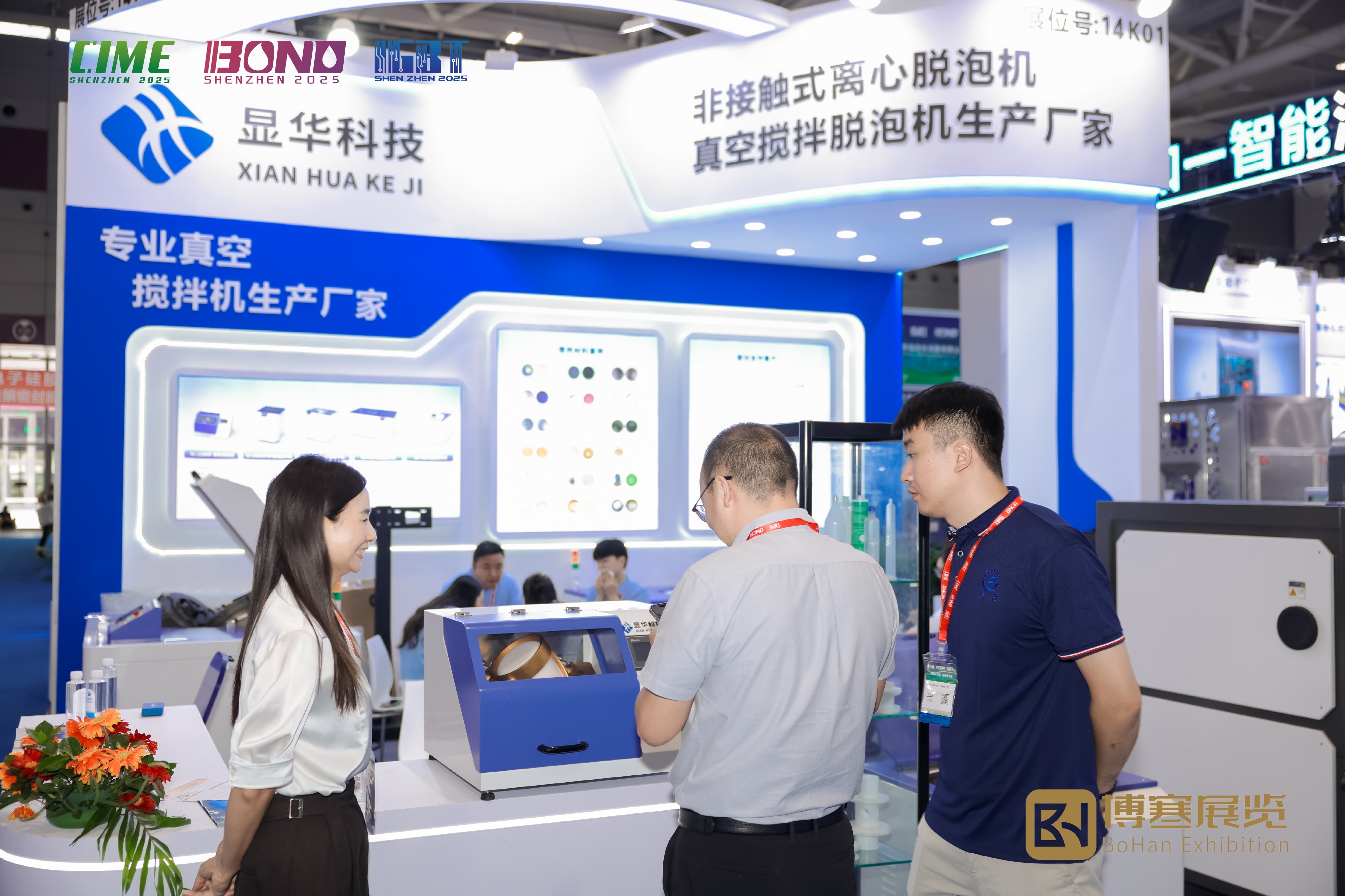
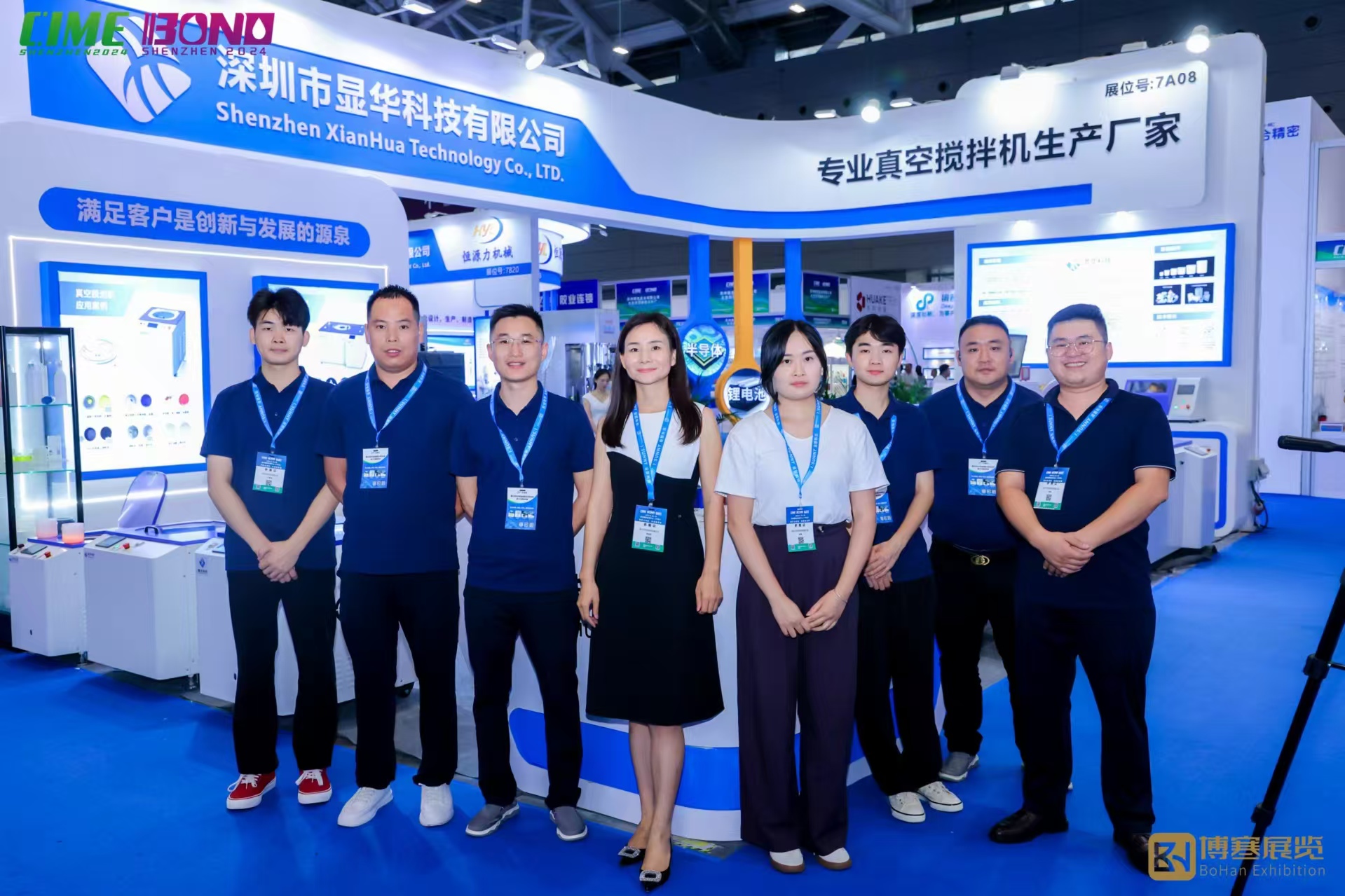
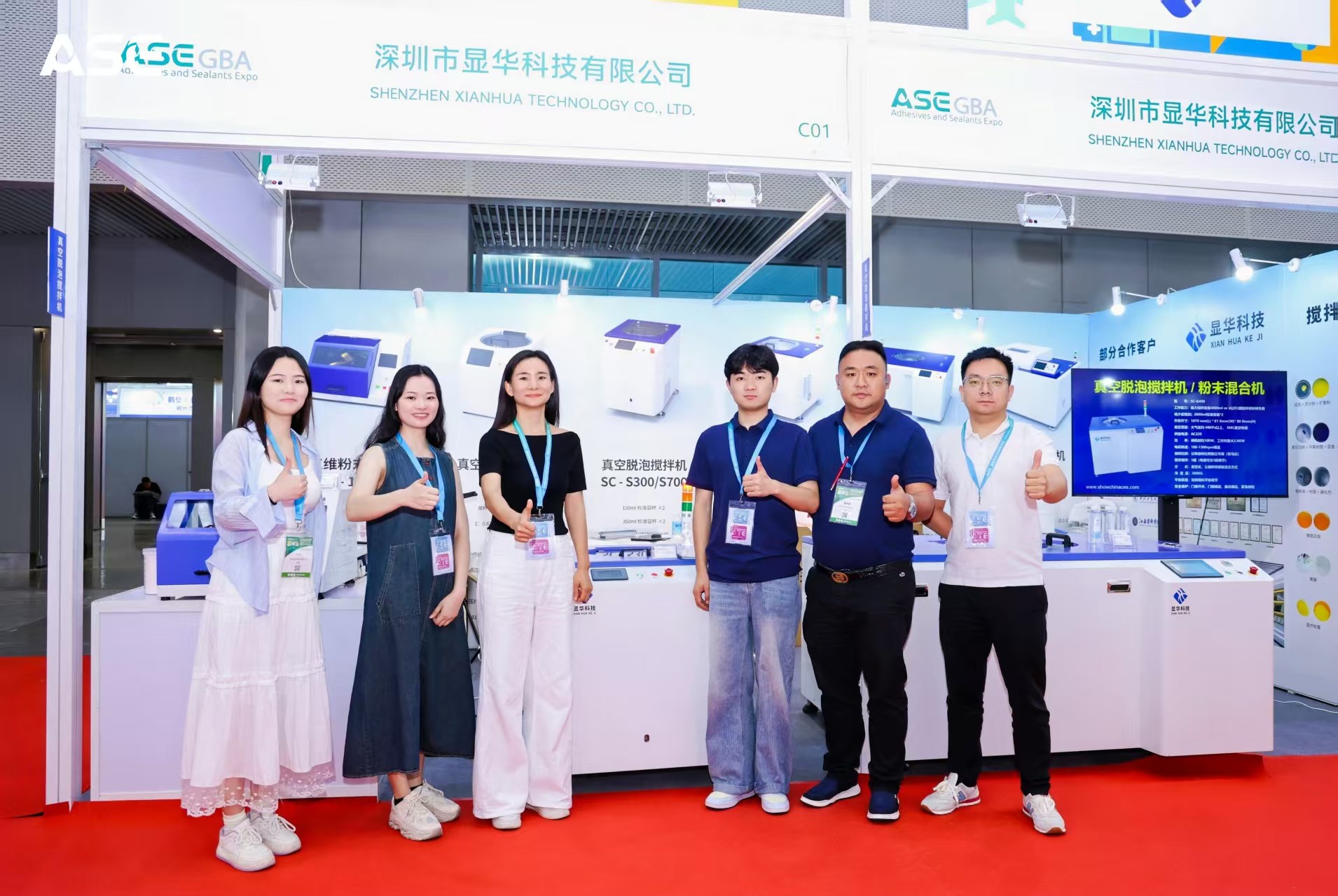
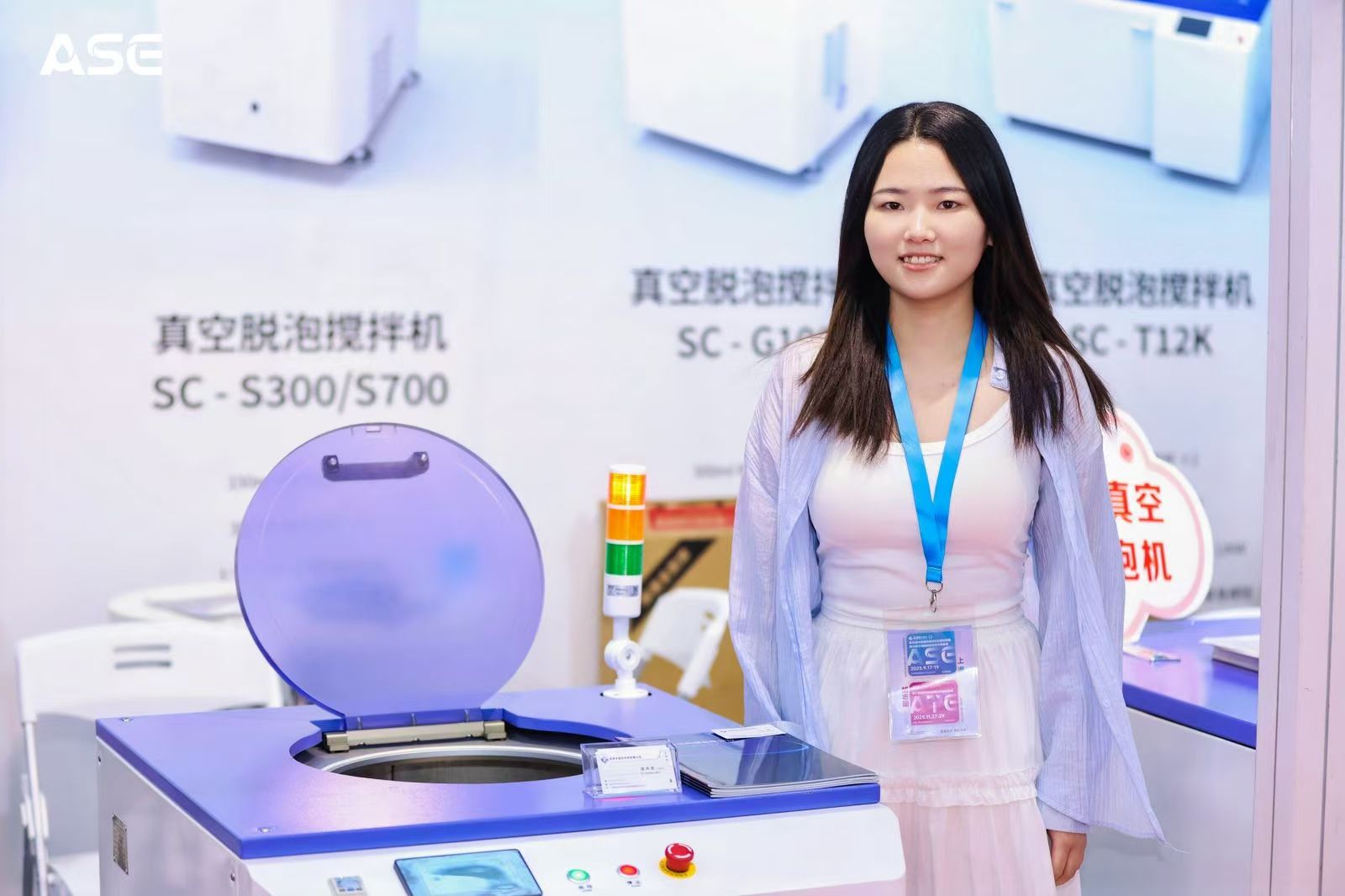
Exhibition View 1
Exhibition View 2
Exhibition View 3
Exhibition View 4
Exhibition View 5
Exhibition View 6
Exhibition View 7
Why Choose Us

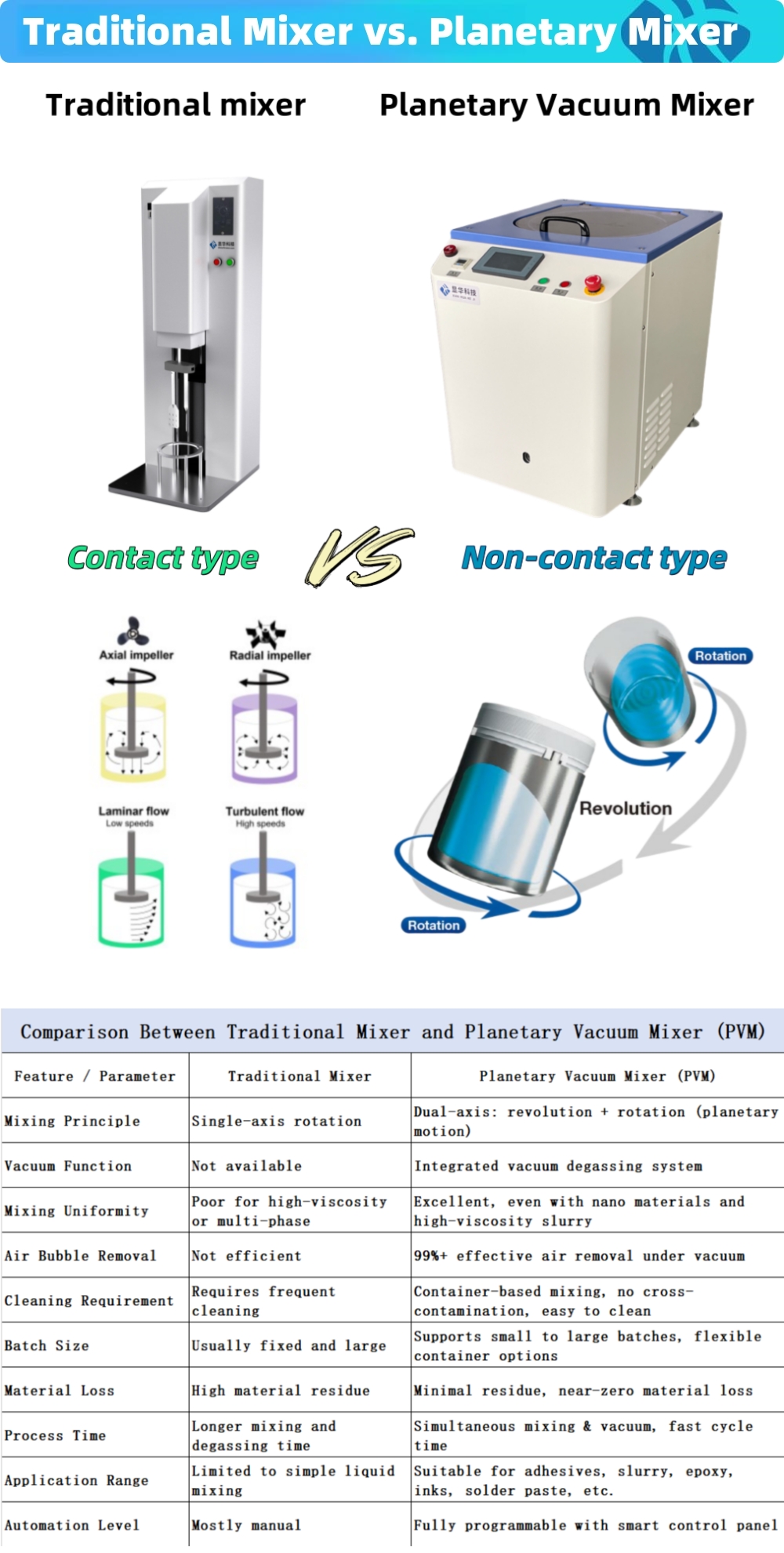
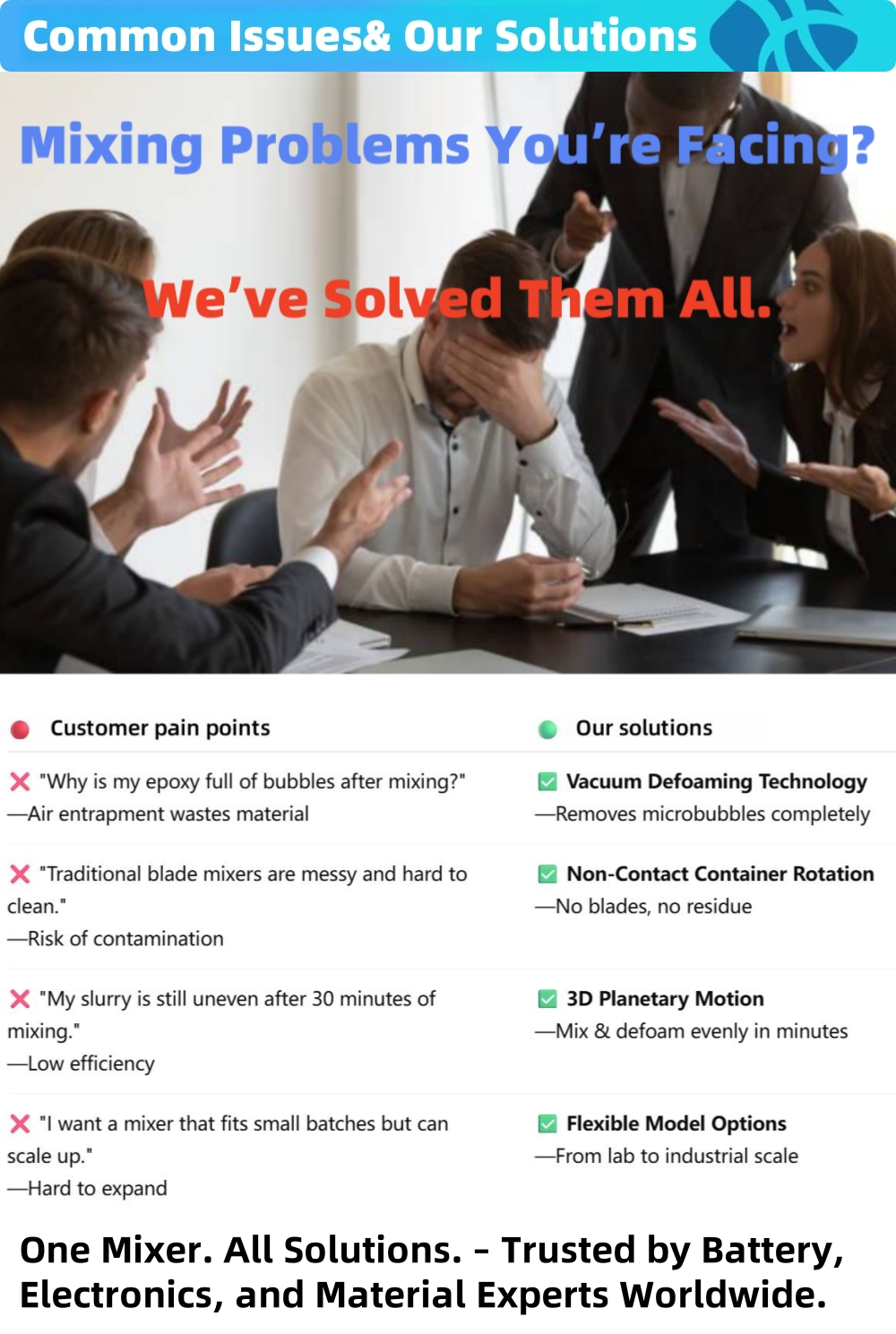
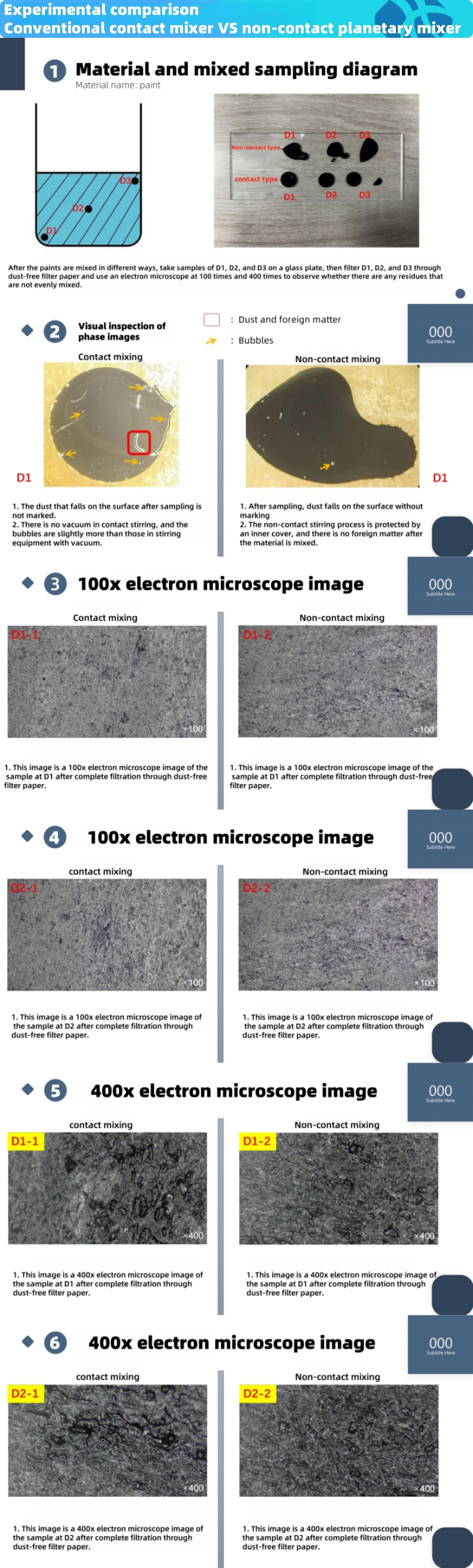
Our mixers are chosen for their ability to efficiently mix, disperse, and degas materials, particularly viscous ones, in a single process. Their planetary centrifugal mixing method, which avoids the use of paddles or impellers, minimizes air introduction and can even remove existing air. This makes them suitable for a wide range of applications, from research and development to production, and across various industries like electronics, pharmaceuticals, and cosmetics.
Why Choose Us Diagram
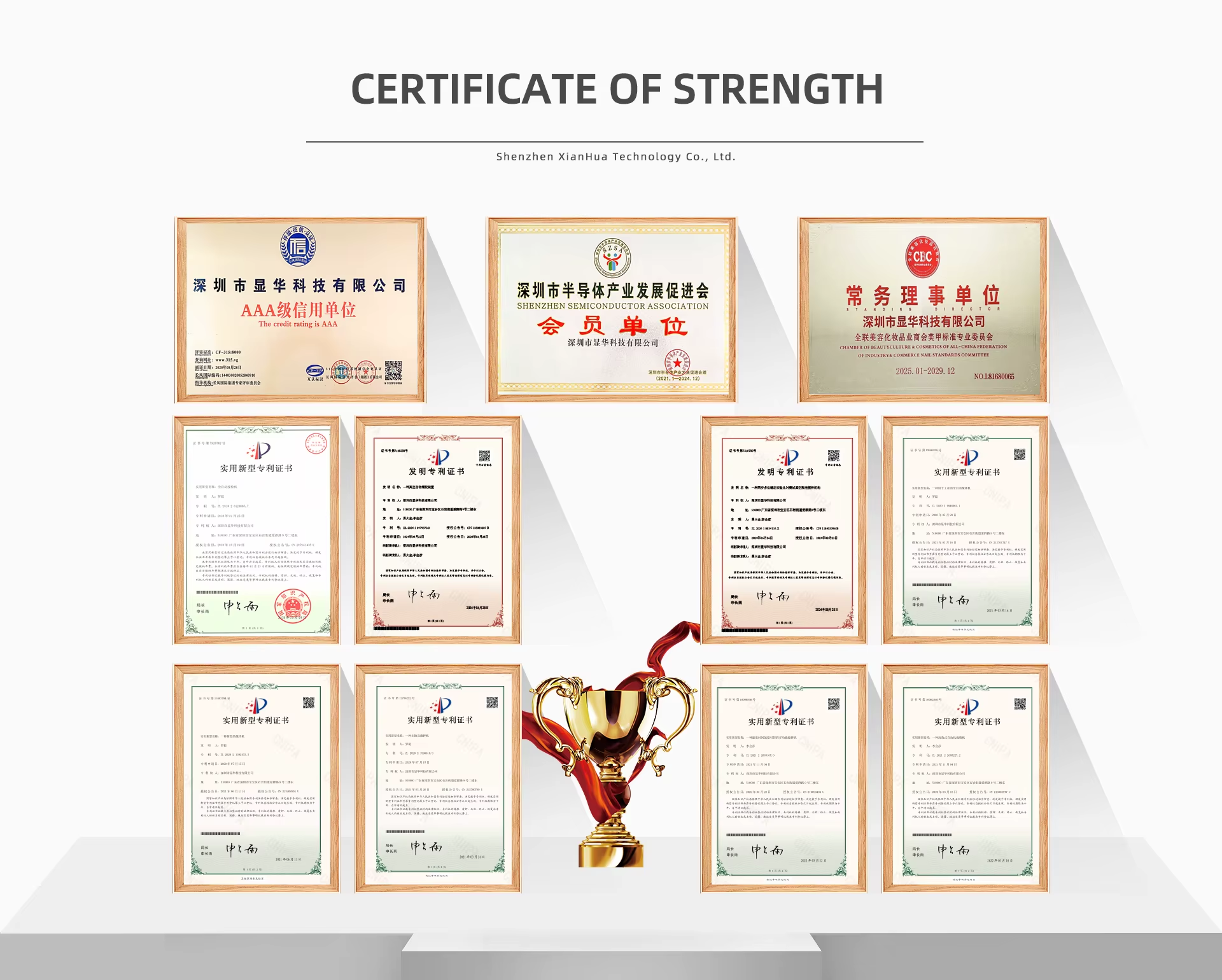
Certifications
Certificates Display
Frequently Asked Questions

1. What is a Planetary Centrifugal Mixer?

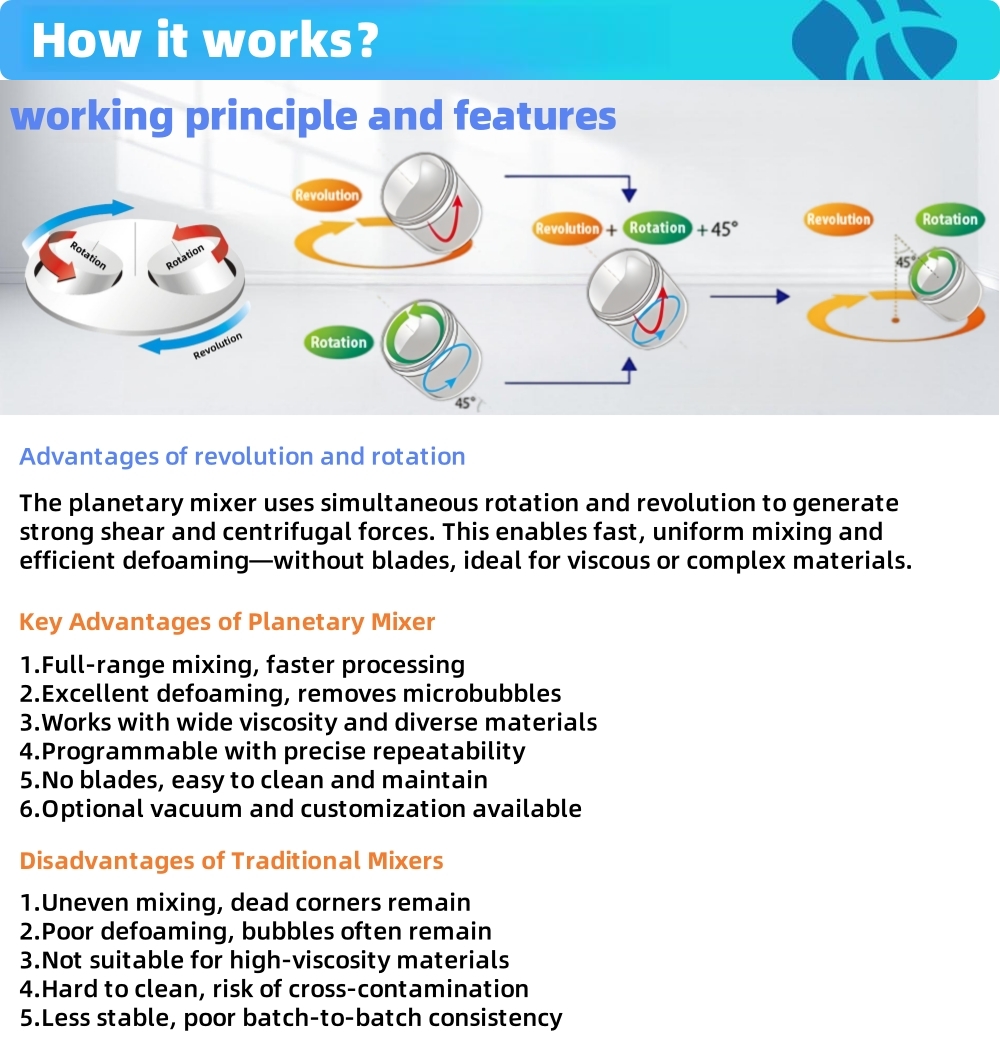
A Planetary Centrifugal Mixer is an advanced mixing system that simultaneously applies revolution and rotation to the container. It enables uniform mixing, deaeration (defoaming), and dispersion of materials such as pastes, powders, liquids, and viscous compounds — without using any blades or agitators.

2. What materials can be processed with this mixer?

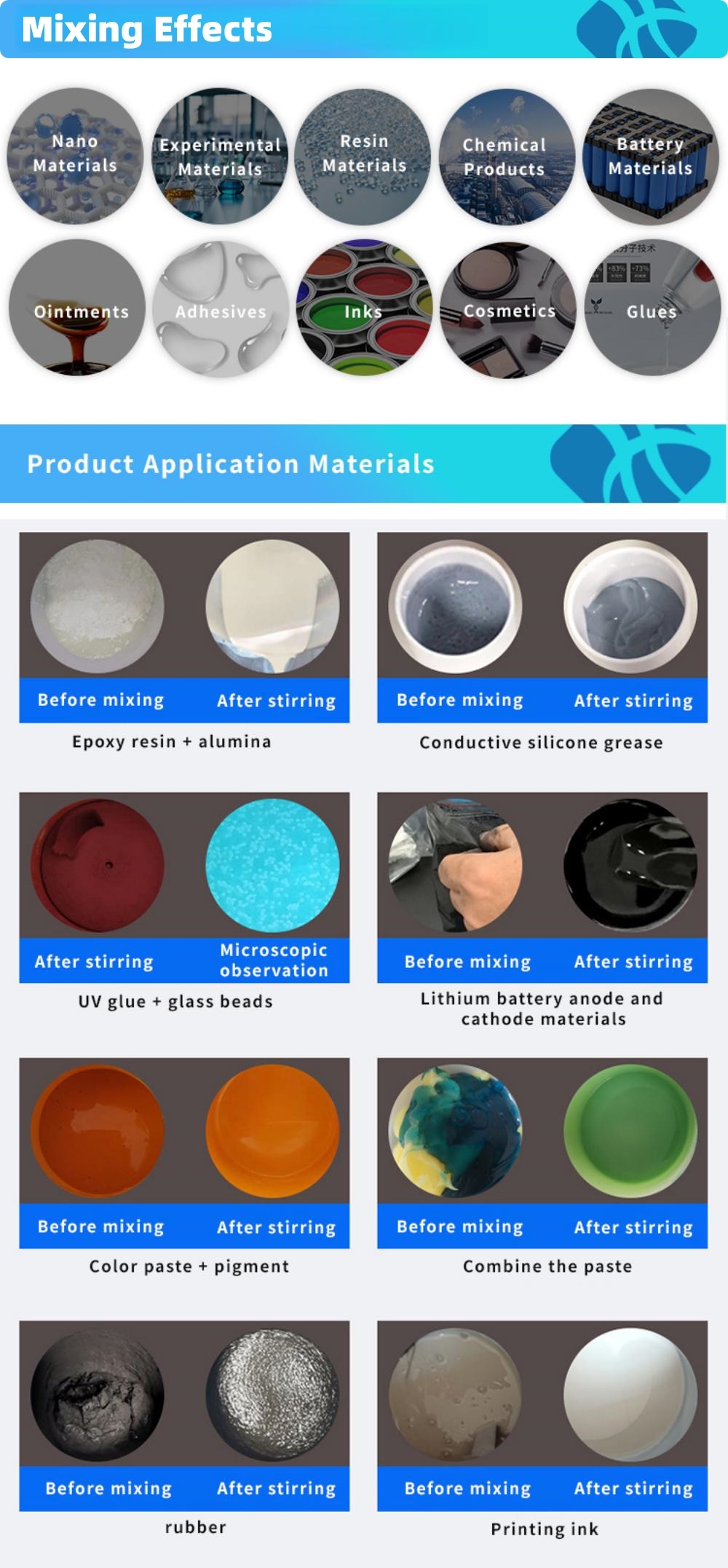
It is suitable for a wide range of applications, including: IC Packaging Materials (epoxy, silver paste), LED Phosphor and Encapsulant, MLCC/Capacitor Slurry, Lithium Battery Slurry & Electrolyte, Thermal Conductive Materials, Adhesives & Sealants, Cosmetics (foundation, creams), Medical Materials (hydrogel, bone cement), Graphene & Nanomaterials, 3D Printing Resin & Photopolymers.

3. What is the difference between revolution and rotation?

Revolution: The container orbits around the central axis.
Rotation: The container spins on its own axis.
This dual-motion creates intense shear force for efficient mixing and eliminates bubbles without damaging sensitive materials.

4. Does the mixer support vacuum deaeration?

Yes, most models can be equipped with a vacuum system to perform simultaneous mixing and vacuum deaeration, ideal for removing microbubbles in highly viscous materials or sensitive formulations.

5. Is it possible to scale from lab use to mass production?

Absolutely. We offer various capacity options: Small-scale (e.g., 100ml–300ml for R&D), Pilot-scale (1L–2L), and Production-scale (5L–10L and beyond). All models maintain consistent mixing performance and can be customized based on your process requirements.

6. Does it damage sensitive particles like nano or graphene materials?

No. The non-contact, blade-free mixing method minimizes mechanical stress, making it ideal for nanomaterials, graphene dispersions, and other shear-sensitive materials.

Related Products